48-hour strike paralyzes commerce and heats up several neighborhoods in San Francisco
The 48-hour strike in San Francisco de Macorís reaches its second day with over 20 detainees, closed businesses, and heavy protests.
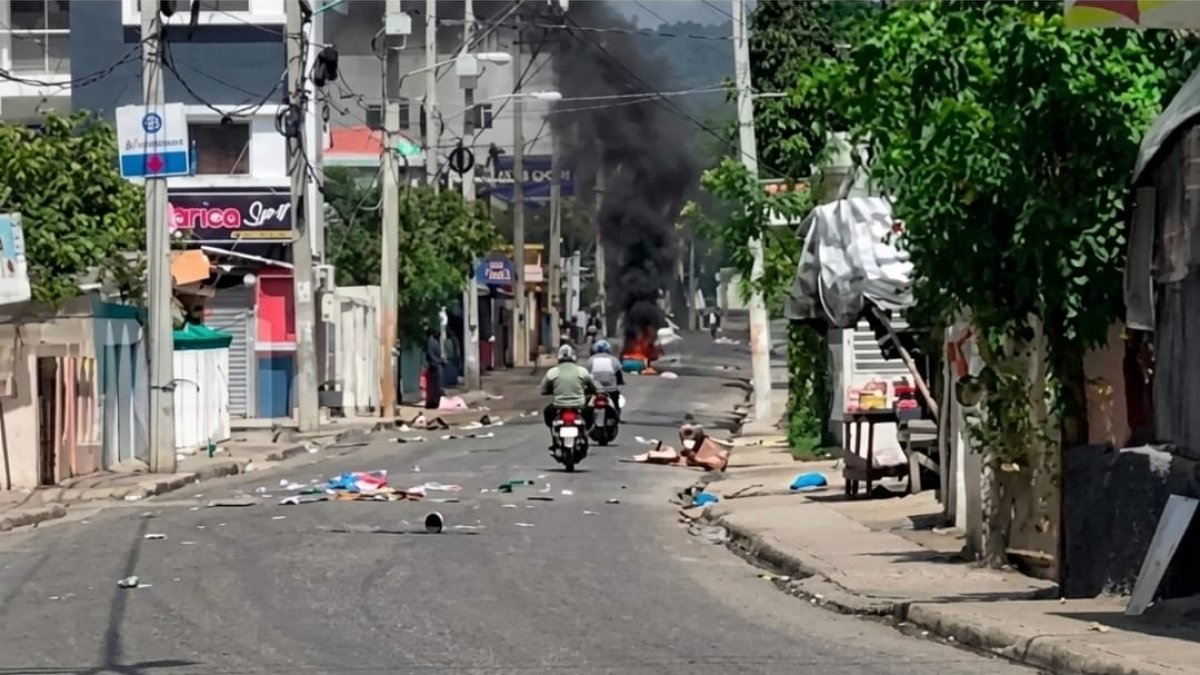
My wonderful people from our beloved land of the Jaya, the 48-hour strike called in San Francisco de Macorís, Las Guáranas, and Pimentel has reached its second day this Tuesday, keeping the city in a high-tension scenario. The protest movement, which kicked off last Monday, has left a preliminary balance of over 20 people arrested, closed businesses in the downtown area, and a paralysis reaching almost 80 percent in working-class sectors, according to data provided by the Collective of Popular Organizations.
The mobilizations and clashes have been strongly felt in different points of our urban and suburban geography. Among the sectors most affected by the protests are Las Flores, San Martín, Pueblo Nuevo, Vista del Valle, and Las Espínolas. Likewise, the situation has reached stretches of the Cenoví highway, the route that connects with the Duarte highway and the municipality of Villa Tapia in the neighboring Hermanas Mirabal province, reflecting the extent of the discontent across the entire area.
The spokesperson for the strikers, José Mercado, detailed that during the first day alone about 17 young people were arrested, and he denounced that some relatives still haven't been able to locate their loved ones. Likewise, the grassroots leader demanded the immediate release of all detainees, assuring that they have suffered mistreatment at the local police station, and warned that the struggle could be extended if these demands are not met.
The reasons behind this strike action respond to accumulated claims that affect the daily lives of our people in the Duarte province. Among the main complaints are the high costs of electricity rates along with constant blackouts, the increase in fuel prices, and the high cost of basic food basket products. Added to this are historical demands for public works and infrastructure that remain pending, such as the construction of the beltway, the road linking San Francisco with Río San Juan, and the reactivation of the paving program in the neighborhoods.
Despite the confrontational outlook, Mercado pointed out that the convening organizations remain open to dialogue, although he lamented that official instances have not fostered an adequate climate to sit down and analyze the situation together with civil society sectors. Faced with the lack of responses, the leader issued a strong warning: if the authorities do not present solutions starting the next day, our city will turn into a hornet's nest of protests. In addition, he announced that upon the strike's conclusion, popular groups will meet in Santiago to plan a possible strike covering all 14 provinces of the Cibao region.
For our *francomacorisana* community residing in the United States, especially in New York, finding out what is happening in our homeland generates deep concern, because we left our families, friends, and the neighborhoods that watched us grow right there. The economic difficulties, blackouts, and lack of basic public works directly impact our people, hitting the pockets of those who bust their tails every back home.
It is wise to closely follow the development of these events in our Duarte province to know the direction negotiations will take and whether the authorities will respond to the demands raised by the popular organizations. Keeping ourselves informed about the decisions adopted both in San Francisco de Macorís and in the Cibao coordinations allows us to stay connected with the realities of our people and always support the well-being of our town.